
Freight: picking a line and settling the bill
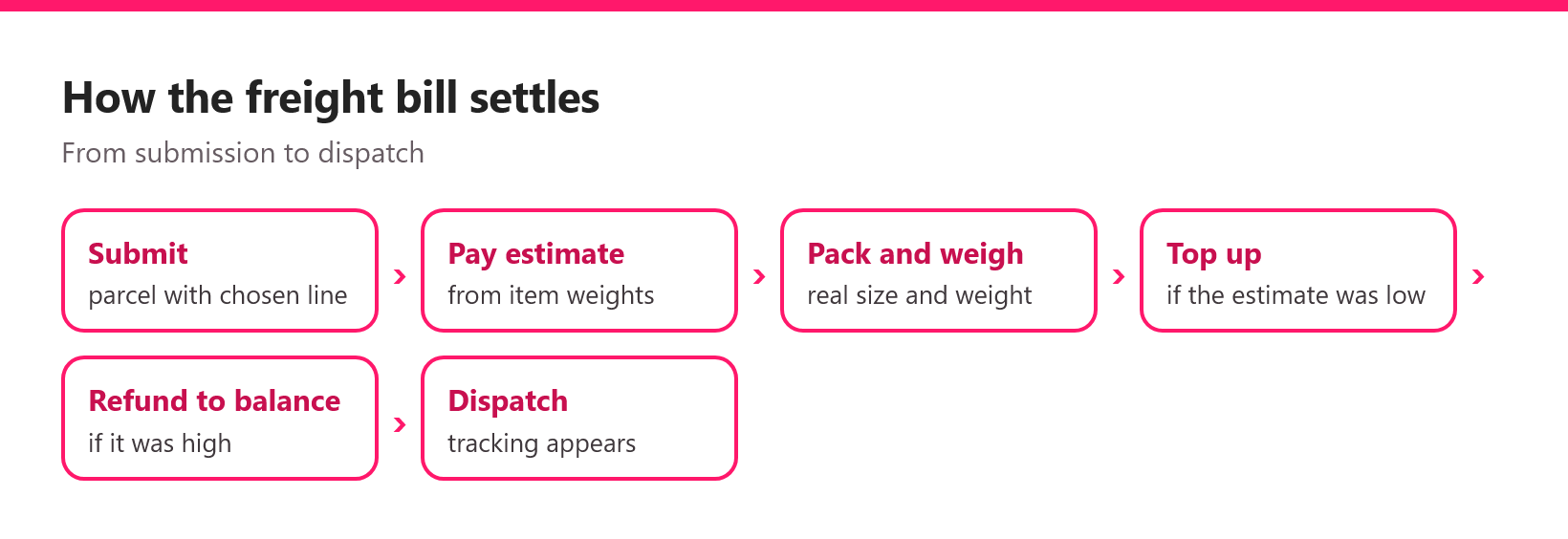
Freight is paid twice in a sense: an estimate when you submit the parcel, then a settlement once the warehouse has packed and weighed it. In between you choose a line, and the line decides most of the price.
In whose hands
The warehouse until dispatch, then the line's carriers
You are waiting on
Packing and weighing, then the hand-over
Money at this stop
The freight estimate, then any difference
Lines, and what their names tell you
100buy lists shipping options as lines with names such as FZ-Royal Mail-UK-2-1 or Australia Post-AU-2-6F. The carrier in the middle of the name is the one that usually delivers in your country; the letters and numbers around it tell routes of the same carrier apart. Two lines with the same carrier can differ in price, transit time and size limit.
On October 22 every line offered to the six destinations we tried (US, UK, Germany, France, Australia, Canada) was an air line, with transit quoted in working days.
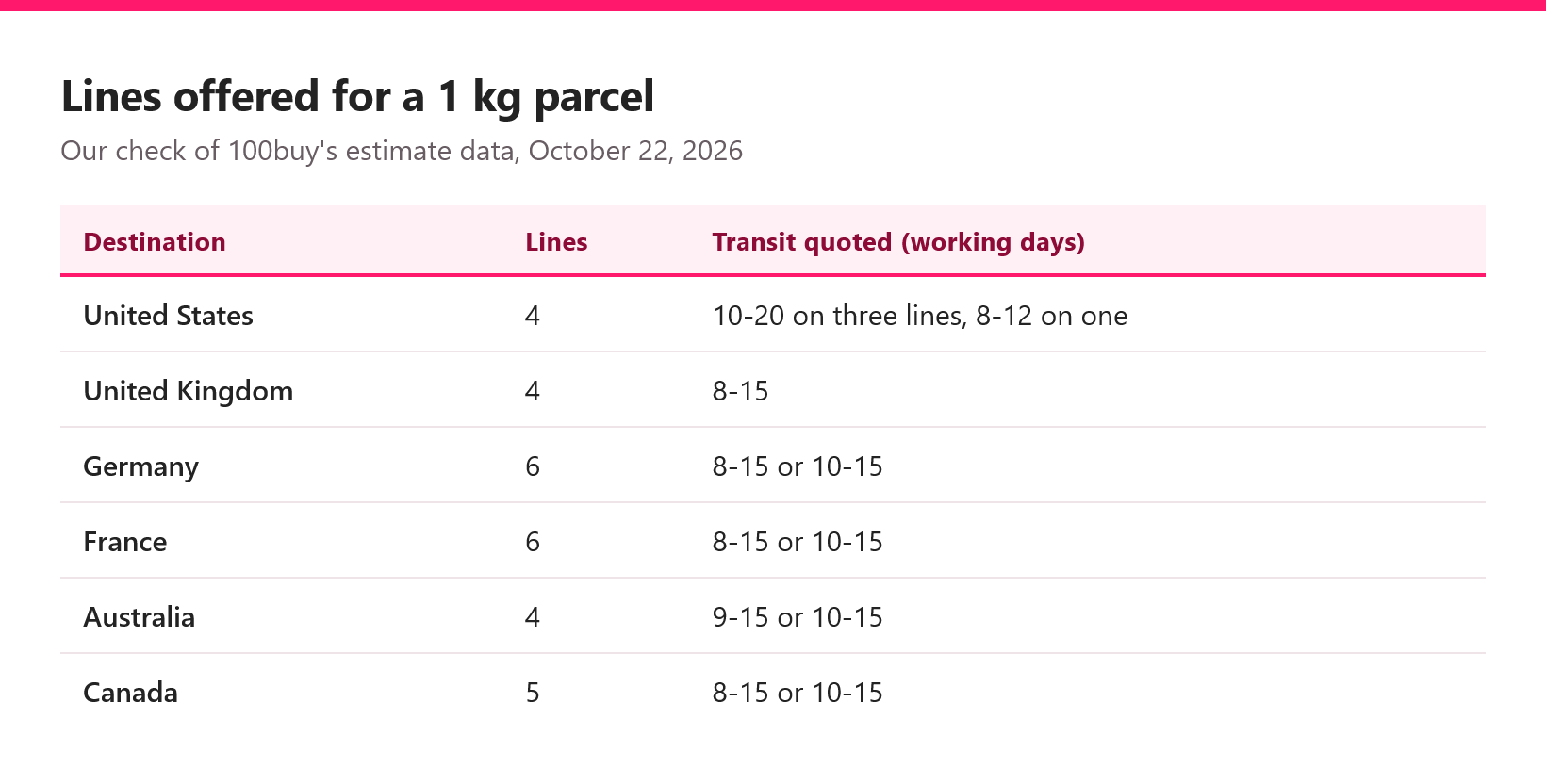
What a one-kilogram parcel cost in our check
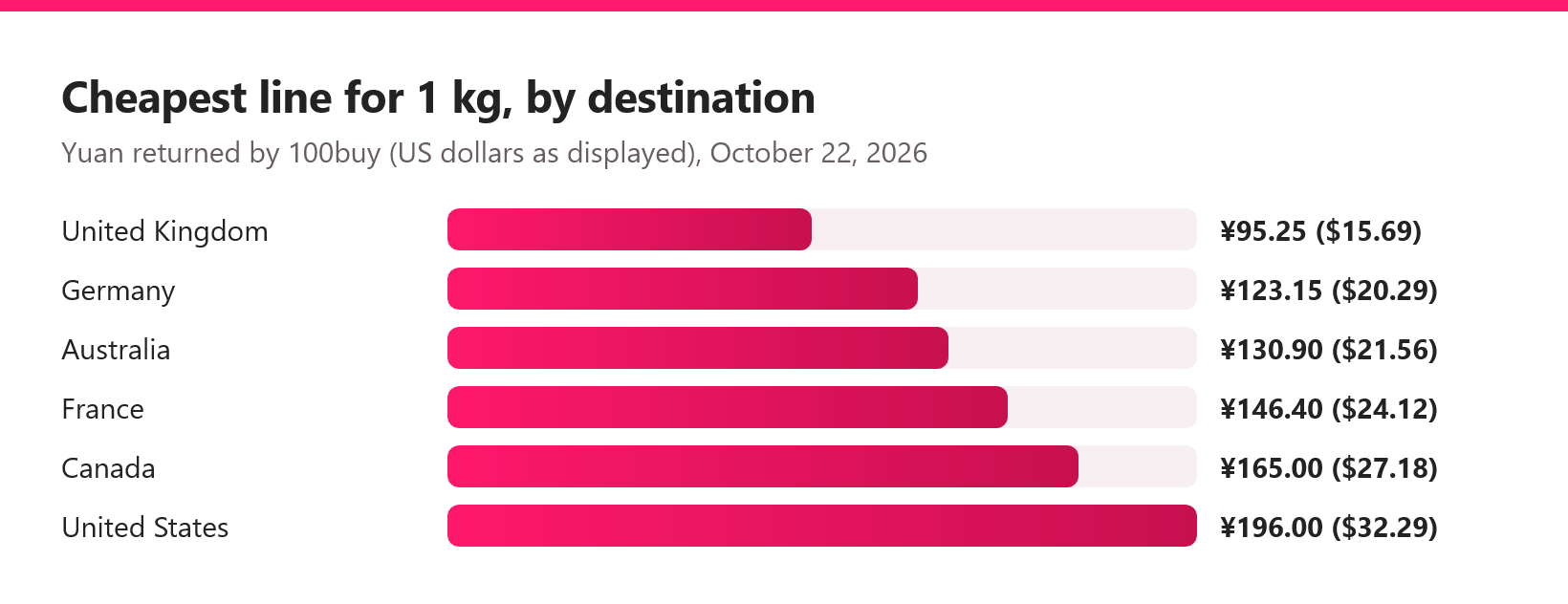
Prices move, so these are a dated snapshot rather than a price list. For a 1,000 g parcel with no box size entered, the cheapest line to each destination came out as below, in yuan as returned by 100buy, with the dollar figure 100buy displayed next to it.
The spread is wide: a kilogram to the United Kingdom cost under half of a kilogram to the United States. Within one destination the gap between the cheapest and dearest line was large too; to the US it ran from ¥196.00 to ¥270.40, the dearer one being the faster line.
Weight steps and a fixed charge per parcel
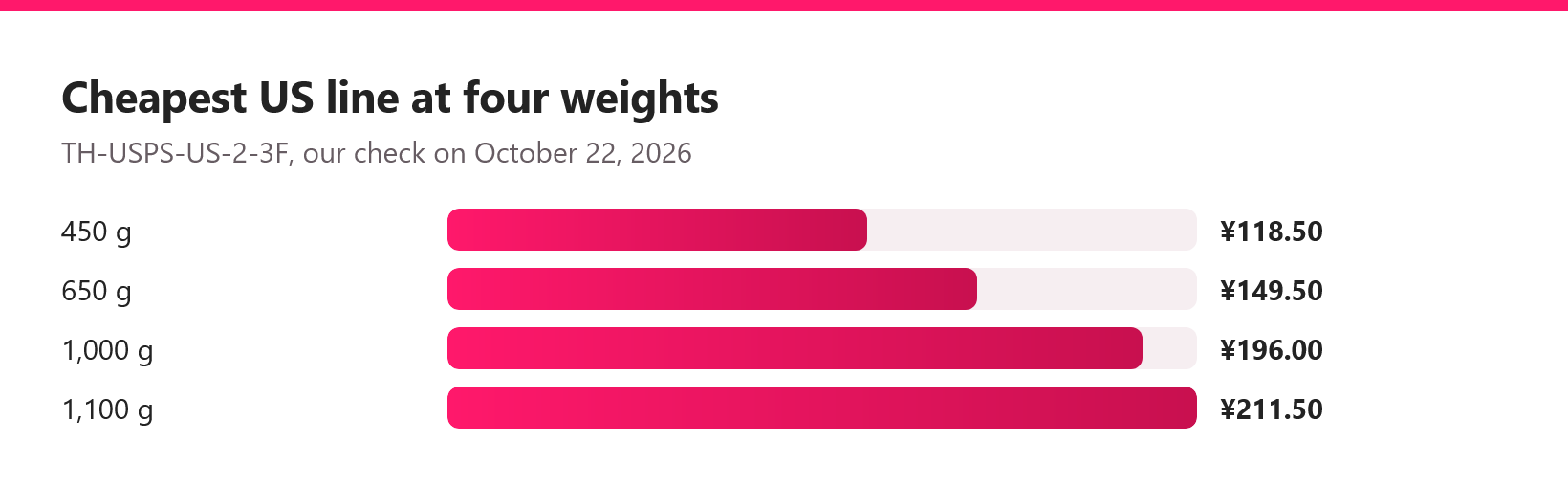
Most lines bill in 100 g steps and round up: on the cheapest US line in our check, 1,000 g cost ¥196.00 and 1,100 g cost ¥211.50, so each extra step was ¥15.50 at that weight. One US line billed by the gram and two Australian lines in 10 g steps, so their prices climb smoothly instead.
Every line also carries a fixed charge per parcel, built into the total rather than shown separately. That is the part that makes a 450 g parcel cost more per gram than a 1,100 g one, and it is the reason the parcel page argues for one box.
Estimate first, real bill after packing
Submitting a parcel triggers a payment for an estimate based on the recorded weights of the stored items and the line you picked. Then the warehouse packs it, and the carrier's measured size and weight set the final cost. 100buy's Beginner's Guide says any overpayment goes back to your 100buy account after the parcel ships; the Tutorial adds that an underpayment is collected under Parcel before dispatch.
So the estimate is a deposit, not a quote. The parcel shows as Waiting for Confirmation while it is being packed and Wait for Payment if a top-up is due.
Checking prices yourself on Shipping Estimation
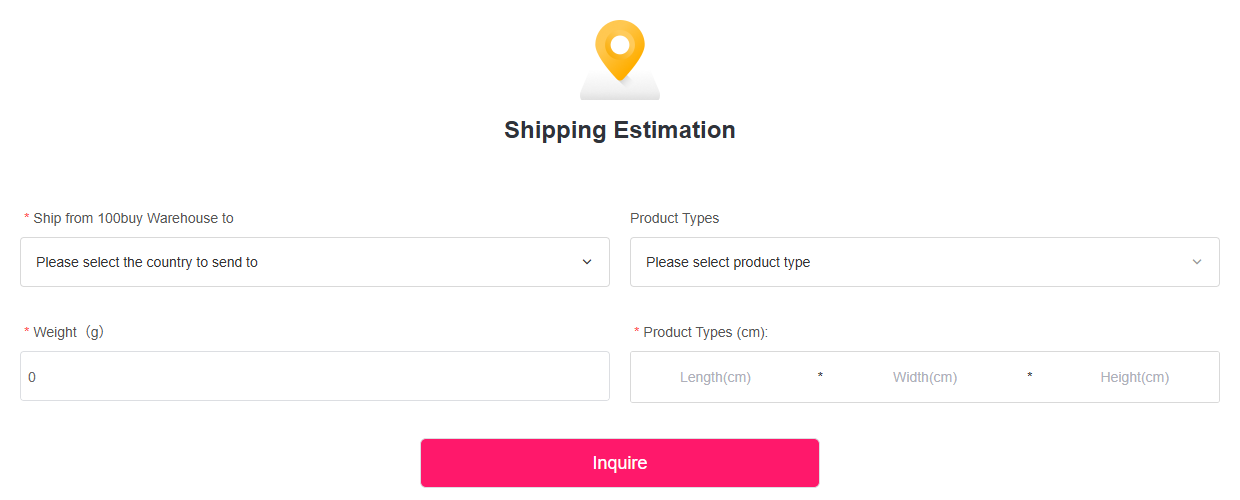
100buy has a public Shipping Estimation page where you pick the destination, a product type, the weight in grams and, optionally, the box size, then press Inquire. Use it with the weights from your warehouse list, and enter a box size if you are shipping anything bulky, since volumetric weight only shows up when you do.
Run it twice, once with your heaviest realistic weight and once with the lightest, and you will see where the weight steps of the cheaper lines fall. You can reach it from the Estimation link in 100buy's top menu.
Delays, protection and what 100buy cannot steer
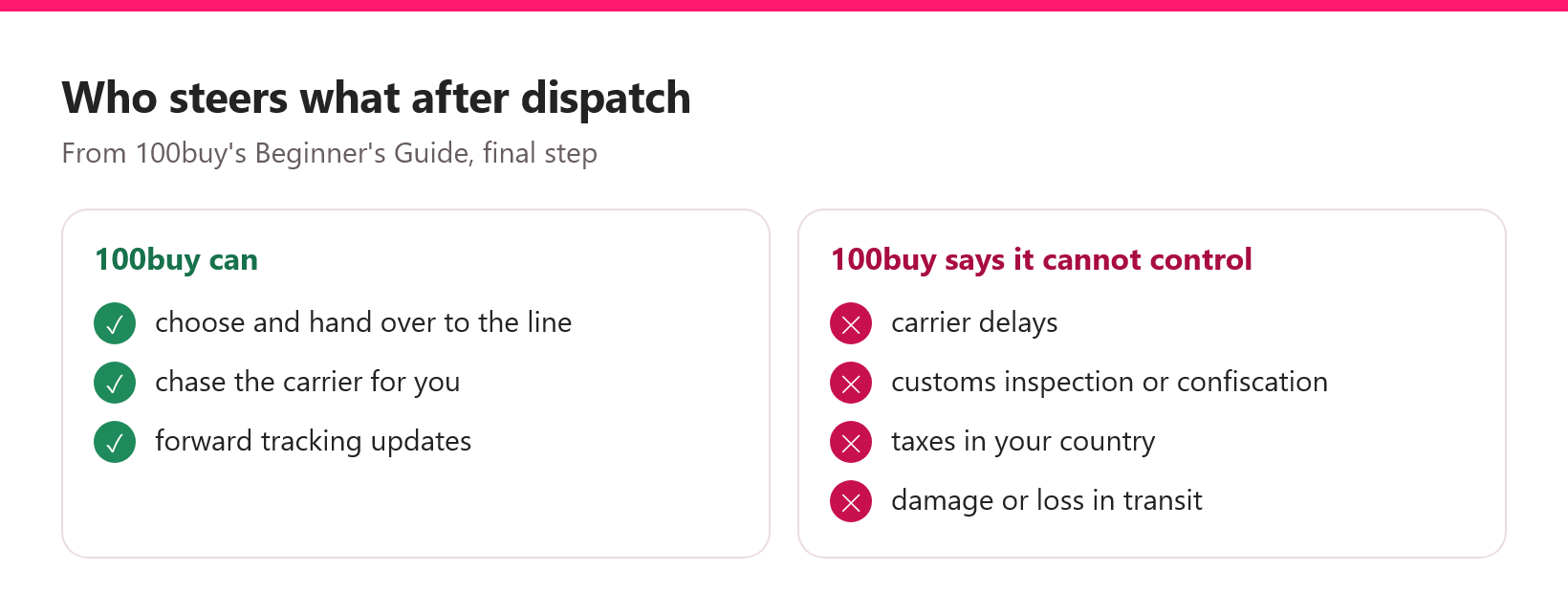
100buy's Beginner's Guide lists what can happen once a parcel is with third-party carriers and customs: delays, confiscation, taxes, damage and loss. It says plainly that it cannot control those events, while promising to help when they happen. The parcel form offers protection options with their own terms; read them on the form itself, because 100buy's pages describe them in more than one way.
We did not find a rule in 100buy's help that declares a parcel lost after a set number of days, so keep tracking screenshots and raise a delay through Consult on the parcel rather than waiting for a cut-off.
Freight is paid from the same account that paid for the goods.